Kloof Conservancy Open Gardens 2026
The Kloof Conservancy Indigenous Open Gardens Show returns for its 26th year over the weekend of 20 and 21 June 2026, offering visitors the chance to experience a carefully selected collection of indigenous gardens in Kloof, Gillitts and Assagay. This much-loved event celebrates the beauty, resilience and ecological value of indigenous planting, with gardens ranging from young, thoughtfully planned spaces to established, award-winning landscapes, shaded forest walks, wildlife-friendly habitats and plant-rich private gardens.
More than a garden visit, the show is also an opportunity to support the ongoing conservation work of Kloof Conservancy. Funds raised through the event help protect local biodiversity and contribute to environmental projects that improve and safeguard the natural areas of Kloof and surrounds. Visitors can look forward to meeting knowledgeable gardeners, enjoying nature-focused activities, and gathering inspiration for creating more sustainable, indigenous spaces at home.
Event dates and times: 20th June 2026 – 9:00 am – 4:00 pm
21st June 2026 – 9:00 am – 4:00 pm
Entrance fee for Cliffview gardens (Gardens 1, 2, 3) – R70
Entrance fee to all other gardens (Gardens 4, 5, 6 & 7) – R40
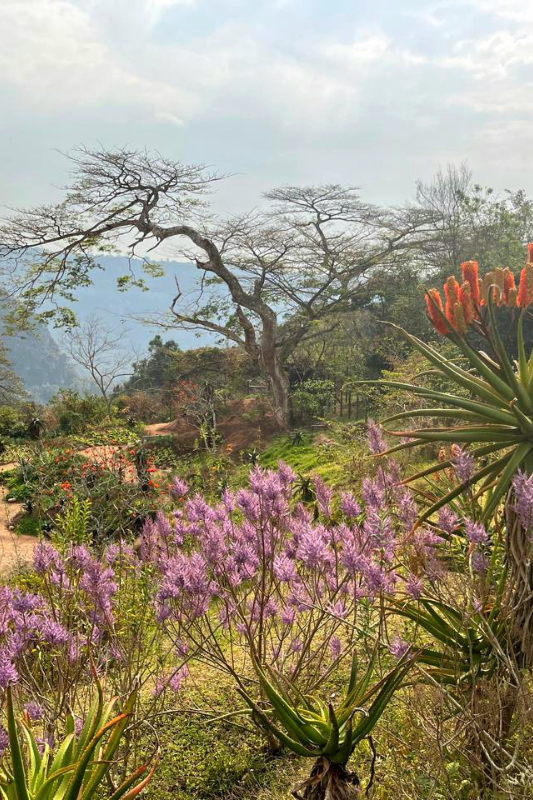
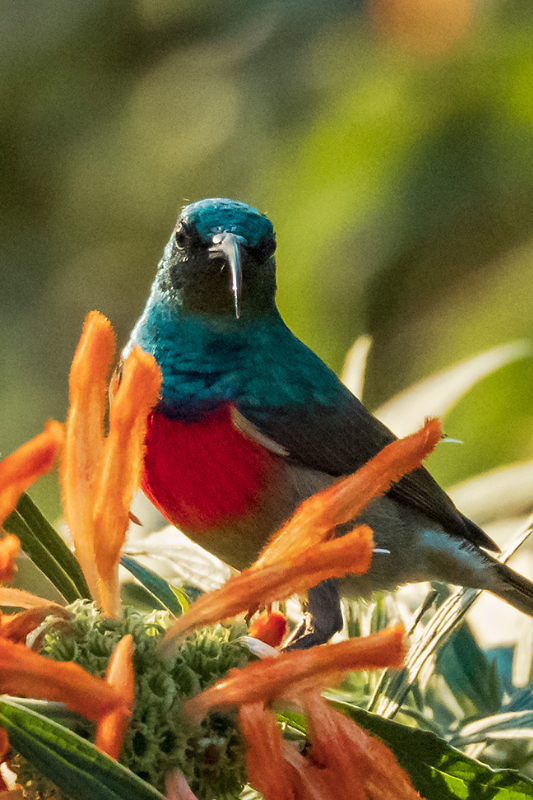
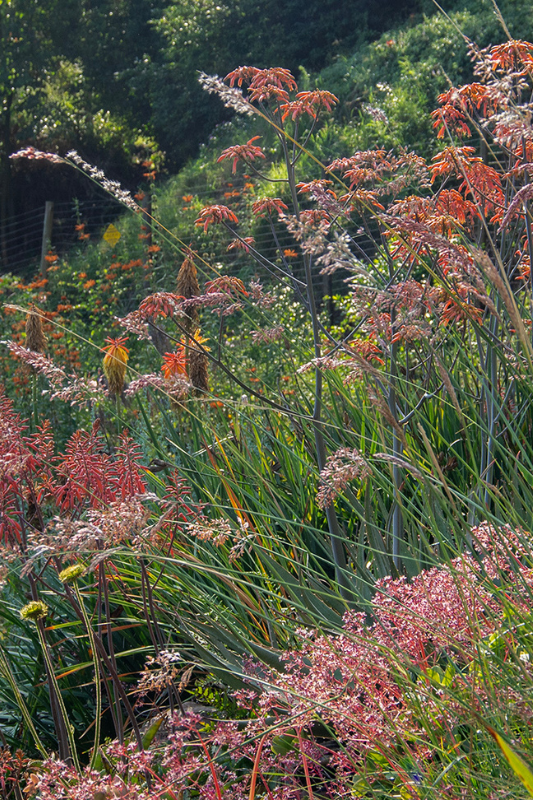
Garden 1- No. 1 Cliffview; Janet Hesketh
Unit 1, Cliffview, 58 Buckingham Road, Kloof
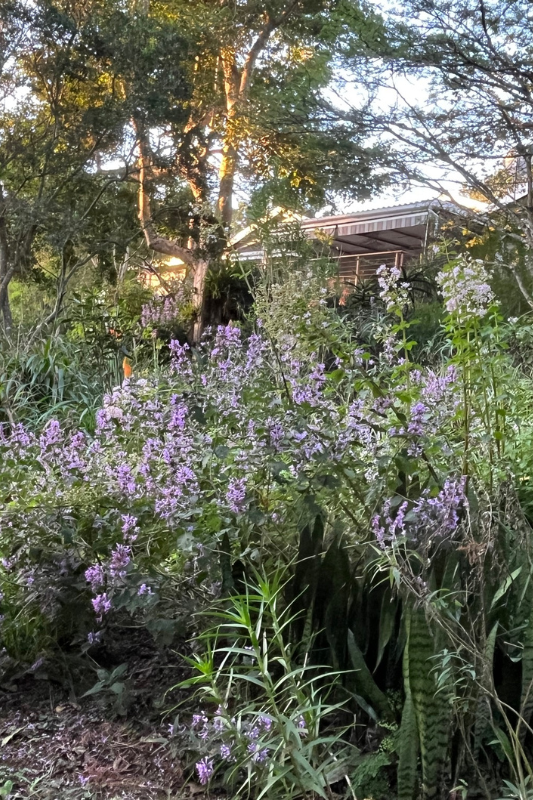
Janet Hesketh moved to Cliffview in December 2019, drawn by its spectacular view over the Krantzview Reserve. What began as a garden of mostly lawn and dietes has been transformed into a 99% indigenous wild garden, designed to attract birds, butterflies and insects while respecting its natural setting.
With the help of her gardener, Josh, Janet brought favourite plants from her previous indigenous garden in Everton and began adapting to the challenges of a north-facing, sun-filled space with poor soil. Over six years, the steep slope has been reshaped with rockeries, hardy indigenous plants, compost, topsoil and carefully placed rocks.
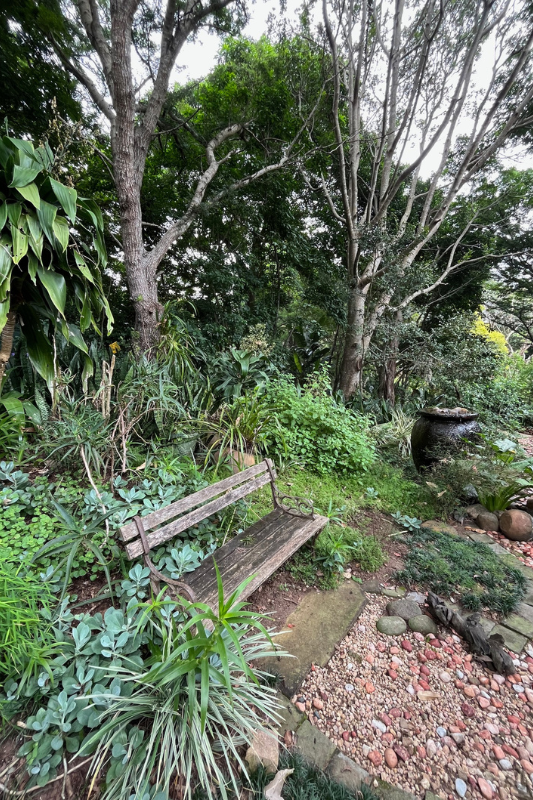
One of the greatest challenges was removing a large, invasive bamboo bank, which spread rapidly across the property. After years of effort, including heavy machinery to remove the roots, the area was reclaimed and turned into a peaceful part of the garden, now home to Janet’s bench. The garden continues to evolve through trial, error and careful planting. Janet takes great joy in its seasonal changes, especially in winter, when colourful aloes and leonotis attract groups of busy sunbirds.
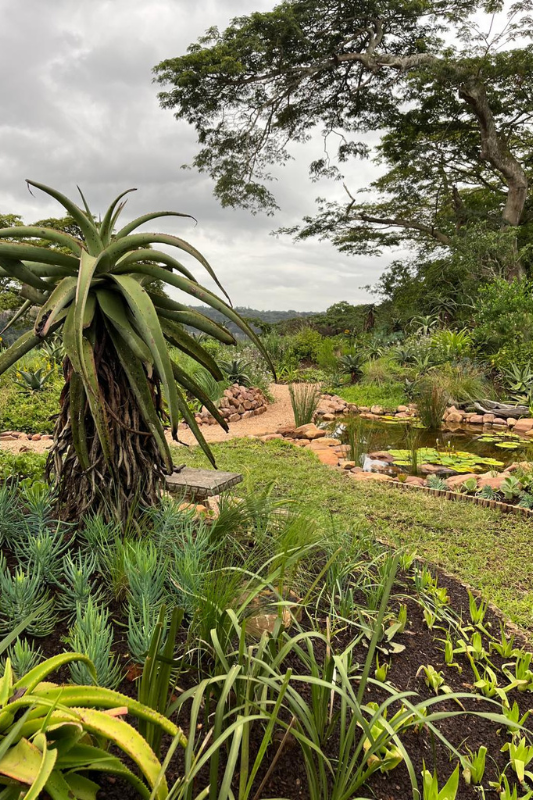
Garden 2- Don and Barbara Coleman
Unit 6, Cliffview, 58 Buckingham Road, Kloof
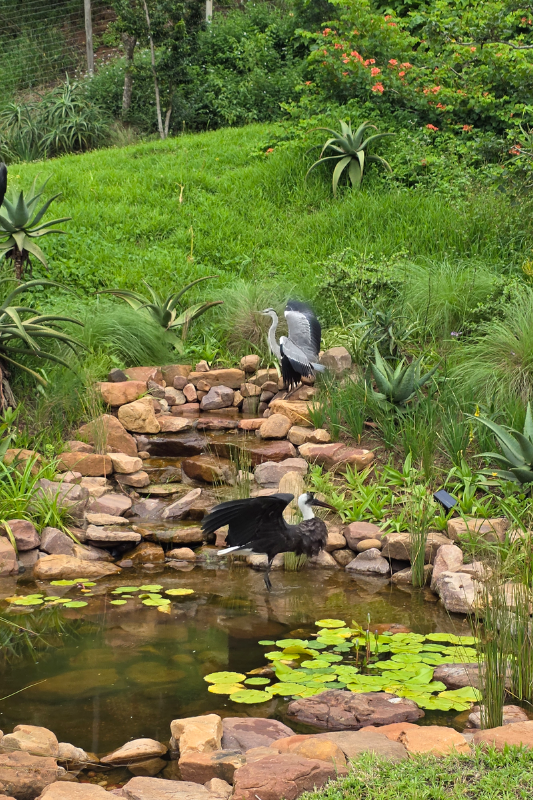
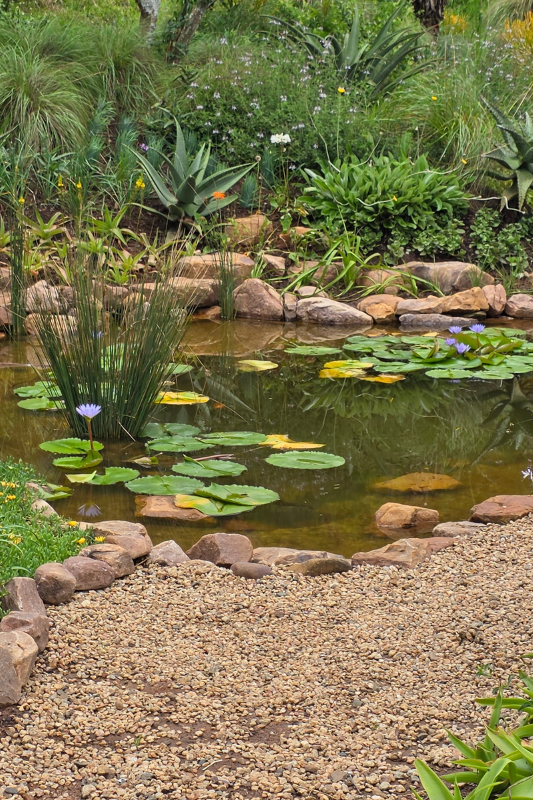
This young indigenous garden began in 2024 as a large, flat lawn and has been transformed into a natural, wildlife-friendly landscape. Created through close collaboration between the owners, family, landscapers and gardeners, the garden features planted mounds, rocks, gravel paths, indigenous grasses, aloes and a naturally filtering pond with a cascade.
Inspired by local grasslands and the surrounding Cliffview area, it was planted with a mix of nursery-grown specimens and locally collected cuttings. The pond quickly attracted frogs, dragonflies, butterflies and birds, making the return of wildlife one of the garden’s greatest rewards.
Garden 3- Cliffview; Allison Gans
Unit 3, Cliffview, 58 Buckingham Road, Kloof
When Allison Gans arrived at Cliffview 11 years ago, there was no established garden, only steep grassed banks and an overgrown alien-filled strip along the fence. Working closely with her gardener, Thami, she began transforming the slopes by terracing the banks, collecting rocks from nearby building and roadworks sites, and creating paths and stairs for easier access. Over time, the rocky banks have softened under dense plant growth. While aloes struggled in the shady, damp conditions, plants such as plectranthus, clivias, arums, barleria, bush ribbon, leonotis and iboza have thrived. Driftwood collected over the years has been woven into the garden, adding natural texture and character.
Wildlife is an important part of the garden, although porcupines often cause mischief by eating crocosmia and digging up bulbs. A water feature near Allison’s study has become a favourite bird-watching spot, once attracting seven louries bathing at the same time. For Allison, the garden is a reminder of how important fresh, moving water can be in creating a bird-friendly space.
Garden 4- Danna Flack
Shambala,10 Impangele Road, Kloof
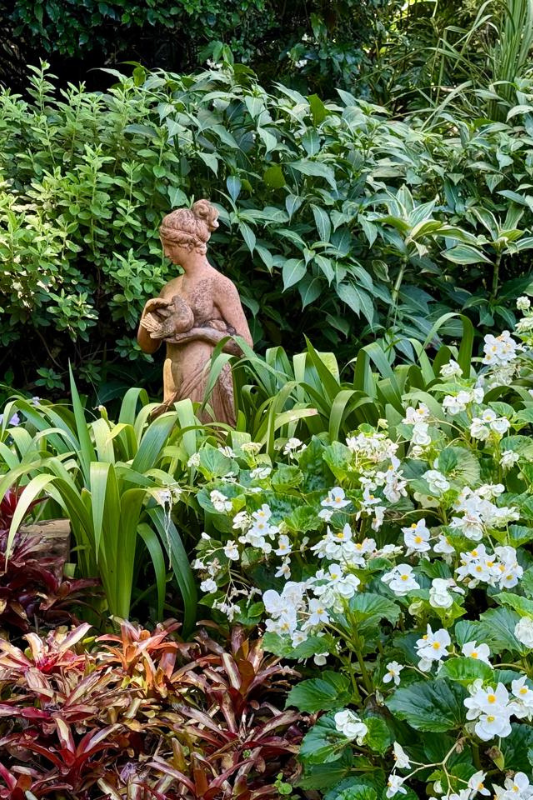
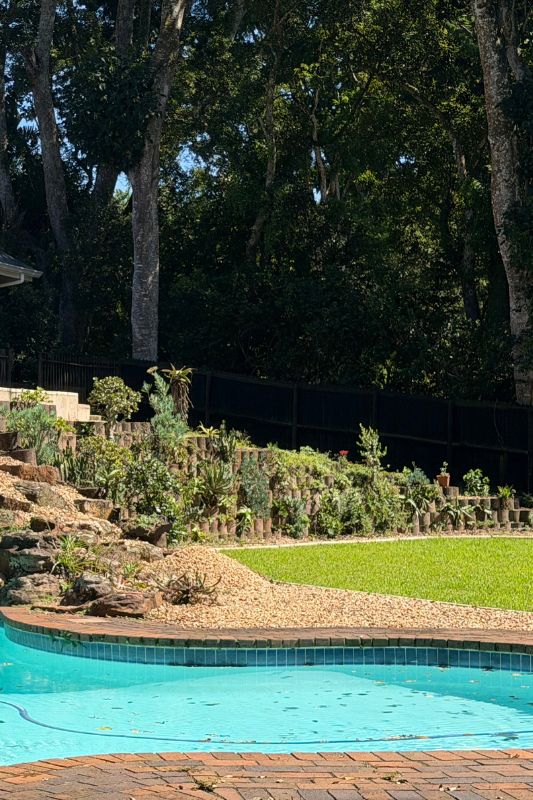
Danna Flack has lived in her home since 1975 and has gardened seriously for the past 20 years. After the removal of a tennis court, the garden was expanded to create larger front and back planting areas, including an indigenous section and driveway garden.The garden is entered through a tunnel-like shaded path, which opens into a diverse and award-winning space. Planting includes a mix of indigenous and exotic trees, annuals, perennials, sun-loving and shade-loving plants, with something for everyone, from orchids and roses to aloes and arums.
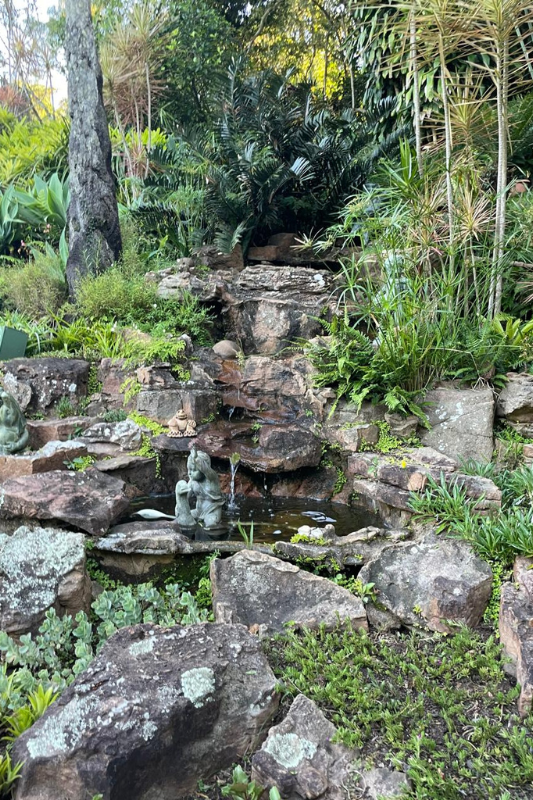
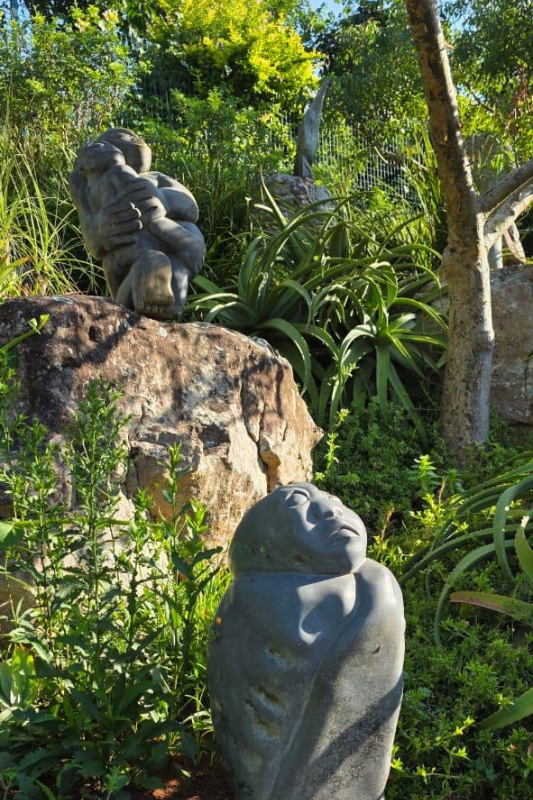
Statues and sculptures collected locally and internationally are placed throughout the garden, alongside a Thai Spirit House, gazebo, large rocks and four running water features, all adding character and serenity. A wide lawn helps frame the planting, while co-gardener Mrs Phumaphi Dlamini plays an important role in maintaining and developing the garden.
Garden 5- Andrew McKay
17 Surrey Lane, Kloof
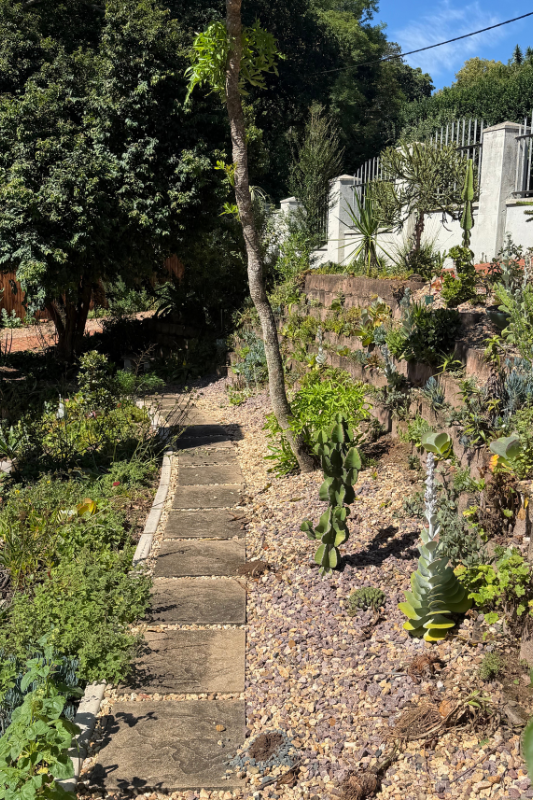
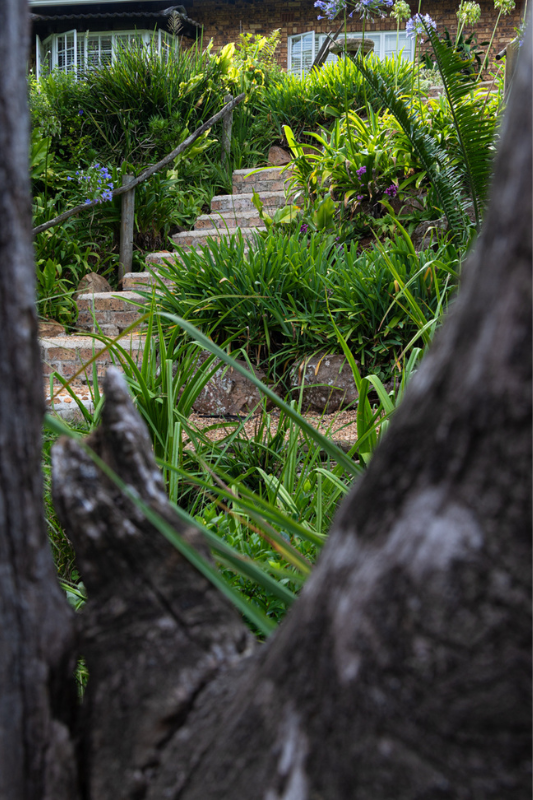
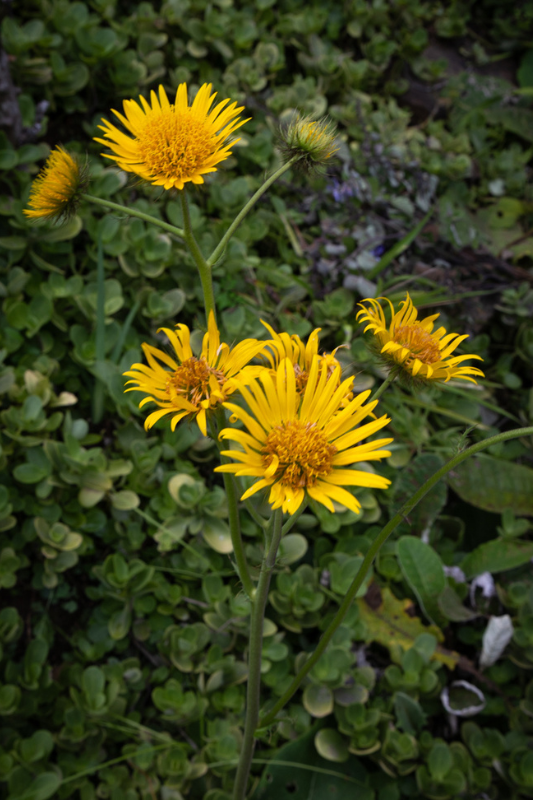
Andrew McKay’s Kloof garden is shaped by the area’s high rainfall and vigorous plant growth. Rather than focusing on getting plants to grow, his approach has been to create a strong layout and manage the garden’s natural abundance.
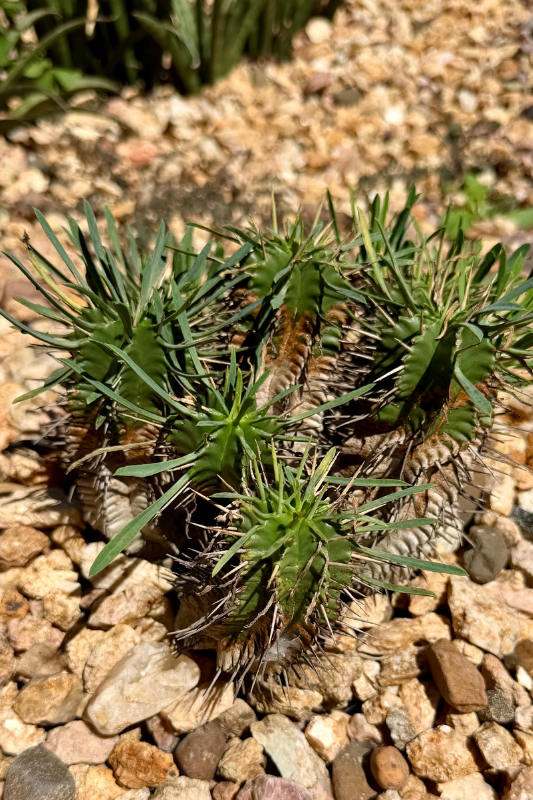
The garden is designed around sun exposure, with different areas planted according to how much light they receive. Sunny sections feature succulents, supported by fast-draining soil and retaining walls that provide ideal conditions for cliff-dwelling plants. In the shaded, south-facing areas beneath large canopy trees, lush shade-loving plants thrive. Creating the structure of the garden took time and several attempts, while ongoing maintenance includes regular pruning to keep growth controlled and natural-looking. Green waste is kept on site in compost beds, which return nutrients to the garden and will eventually become new planting areas.
Garden 6- Glenda and Neil Patterson
11 Valerie Road Gillitts
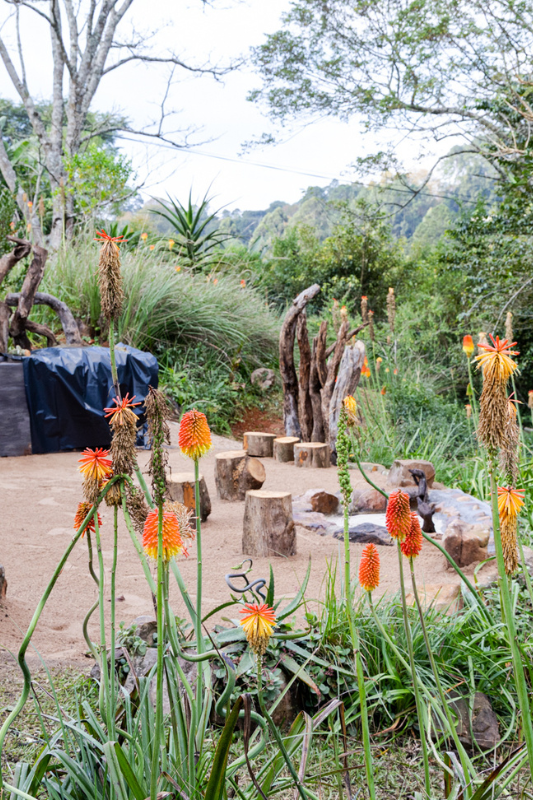
Neil and his family moved to Gillitts in 1993, building their home in a valley that had once been a plantation of gums, wattle and pine. What began as a garden of donated plants and lawn has gradually been transformed into a largely indigenous, wildlife-friendly haven inspired by their love of the bush. The garden is planted in a natural style, with forested areas, leaf litter, groundcovers, grasses, creepers and shaded planting that support birds, butterflies, insects, frogs and other small creatures. Neil is especially proud of the trees he has grown from seed, which now create a forest-like feel.
Closer to the house, a more cultivated area includes lawn, beds, bulbs, aloes and seasonal colour, while the wilder areas are left to thrive with minimal intervention. Favourite spaces include the birdwatching deck and the boma, both offering a peaceful sense of being immersed in nature. This evolving garden is a small piece of Africa in suburbia, created to support biodiversity and provide a haven for wildlife.
Garden 7- Izolda and Tanya Visser
6 Controversy Drive, Assagay
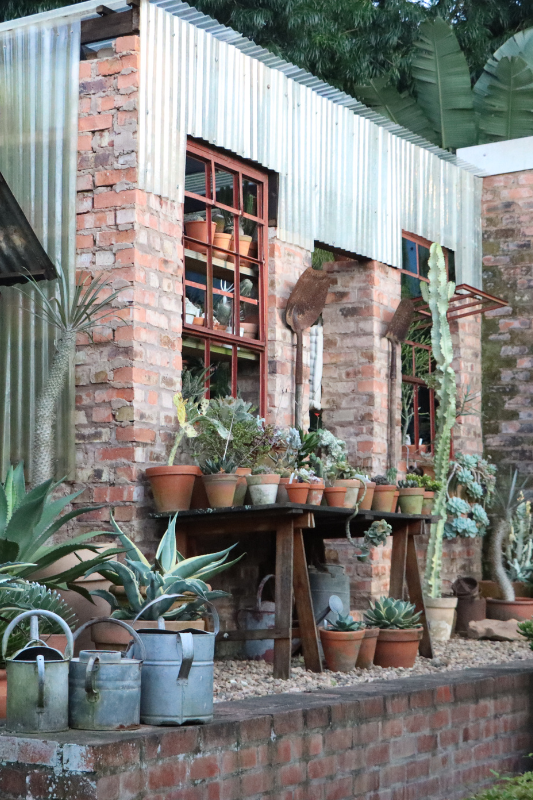
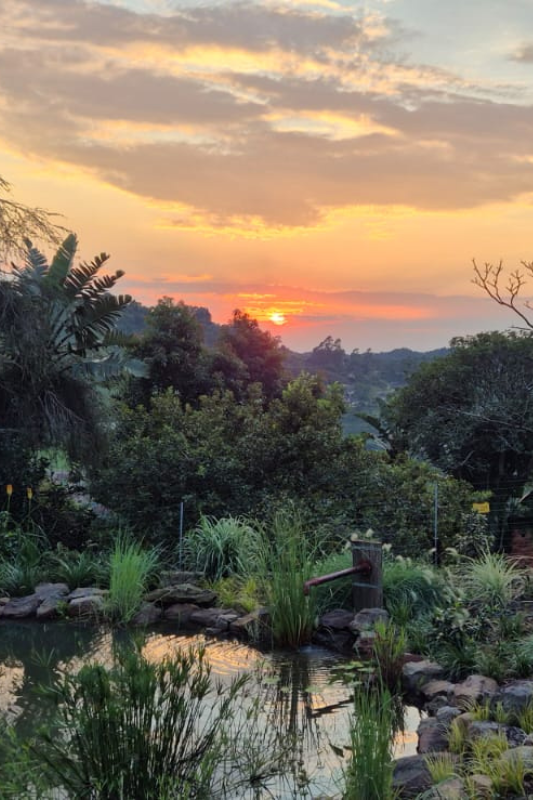
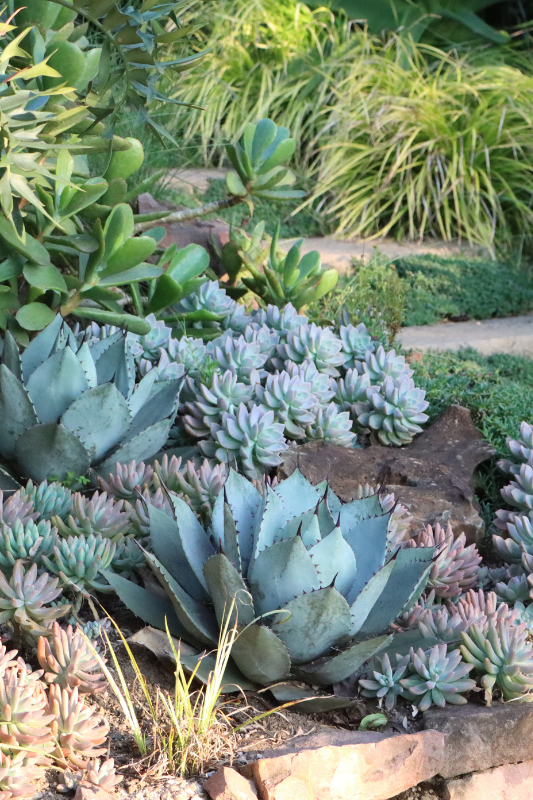
Set on just over two acres, Tanya and Izolda’s garden has become a creative playground, with new flowerbeds and distinct planting areas forming small biomes within the larger garden. Meandering tropical paths through the fern garden contrast with drier grass garden areas, where grasses move gently in the breeze.
The garden is alive with wildlife, from skinks, butterflies and frogs to bees and sunbirds, especially in winter when the aloes put on a striking orange display. There are always seasonal surprises, from orchids in flower to crocosmia seedheads adding interest long after flowering. The garden also reflects Tanya and Izolda’s special plant collections. Tanya’s succulent house features an impressive, carefully labelled collection from around the world, while Izolda’s tropical collection includes orchids, aroids and tillandsias. Their shared passion for plants is evident throughout this diverse and inspiring garden.
Looking for something?
Follow Us