Sort out summer with salvias
It takes just three top-performing salvia hybrids to create a vibrant splash of colour that draws bees, butterflies and nectar-loving birds.
If you are aiming for flower-filled borders and pots throughout summer and beyond, aim straight for our salvia displays in garden centres or check them out online. You should, however, be ready to plant many more of them, as we have over thirteen beguiling perennial varieties, plus a full range of annual salvias like the new Salvia splendens ‘Rocket Red’.
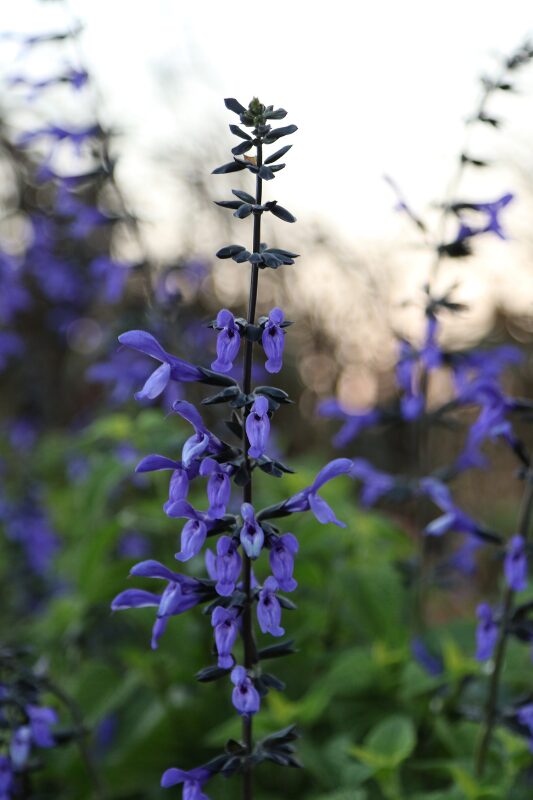
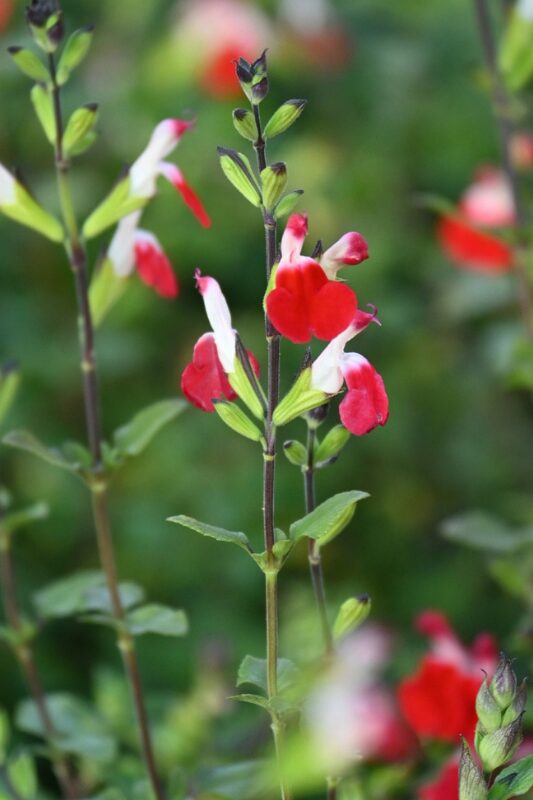
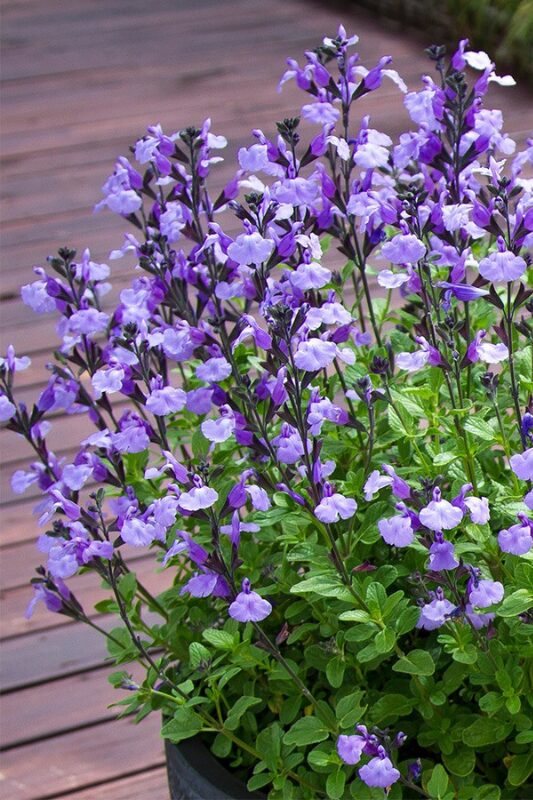
Salvia leaves vary from rough and serrated to smooth and glossy, and you can pick from a wide flower colour range, including reds, whites, all shades of pink, dazzling blues, salmon, orange and the deepest of purple. But there is more, as the cute Salvia gregii ‘Sweet Lips’ produces white flowers with tips kissed in bright red.
Growth habits are equally variable; they can be tall and towering, such as Salvia guaranitica ‘Black and Bloom’, or dwarf and bushy for smaller gardens and pots, like the new Salvia microphylla ‘So Cool Pale Blue’ that has lovely honey-scented pale blue flowers with a compact size of 50 cm x 50 cm.
How to use salvias
Perennial salvias combine well with other summer-flowering plants in billowing, traditional borders, in gardens where grasses are dominant, and in mixed summer containers.
Perennial Salvias are:
- Sun-lovers – a little afternoon shade is not detrimental.
- Climate adaptable – where winters are extreme, replace your stock with fresh plants in spring.
- Fast growing – salvias will not make you wait for their fabulous floral performance,lasting from early spring until late autumn.
- Re-blooming – every light trim after a good flowering flush will encourage more and more blooms.
- Forgiving of soil – any soil type will do as long as it drains well and is enriched with compost.
- Resistant to disease – the plants are not plagued by pests and diseases if the correct growing conditions are kept to.
TIP: Water-wise – they can be quite drought-tolerant when well established, with medium water requirements.
Looking for something?
Follow Us