Bright And Beautiful Beetroot
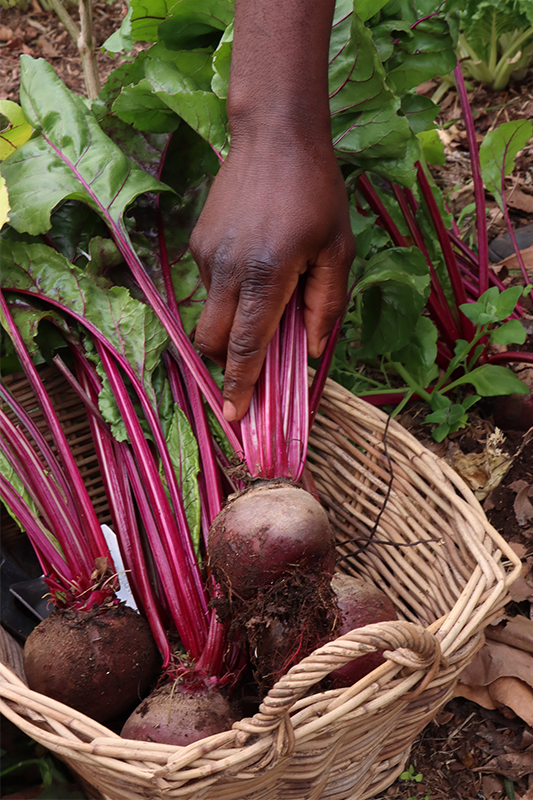


Beetroot is a stalwart of the garden. It is an efficient crop, grown year-round for its root and foliage, that doesn’t take up much space and is also very nutritious.
It is a valuable home garden vegetable that is semi-hardy and biennial. It can be grown year-round for its sweet, tender, succulent roots, which contain more sugar than any other vegetable.
Beets of different colours, sizes and shapes are grown: red, yellow, white, multicoloured, round, long, cylindrical, as well as the huge sugar and mangel beets.
They are very nutritious and contain high levels of vitamins A, B and C, as well as beta-carotene, calcium, folic acid, iron, manganese, phosphorus, silica, and lots of fibre.
The beetroot we know today originated in the Middle Ages, from a plant called sea beet (Beta vulgaris var. maritima) that grew on the dunes along the Caspian Sea. Originally only the leaves were used, as the roots were small and underdeveloped. The Romans were the first people to start cultivating beets for the roots, selectively planting seeds from plants with more swollen roots.
What Beetroots need
For success with beets you need three things: full sun, soil that is friable and drains easily, and regular watering.
Growing beetroot
Beets are best grown from seeds that are planted in situ, as they don’t transplant well.
Soak the seeds in water overnight to aid in germination. The seeds should start to germinate within 10 – 14 days.
Sow the seeds in an area that receives in full sun. They do best in loose, well-prepared soil with lots of organic matter. To grow choice beets, encourage quick, steady growth by keeping the soil moist and weed-free. They should take about 55-65 days to reach maturity.
Because the seeds are actually seed clusters of two to five seeds, the seedlings will appear in fairly dense clumps. Thin out the seedlings to 5cm apart when they are 5cm high. Thin the rows a second time when they are about 7cm high. The remaining beetroot should be about 10-15cm apart. The seedlings from the second thinning can be planted as greens for the table or can be used immediately as small salad leaves for the bowl.
Water regularly throughout the growing season and feed once a month with a liquid organic fertiliser.
Beetroot can also be planted in containers, at least 35cm wide and 40cm deep. Don’t let containers dry out and feed them with a liquid fertiliser once a week.
Companions
Onions and kohlrabi are particularly good companions for beetroot – if you have the space sow a row of each next to each other. Other good companions are dwarf beans, lettuce and cabbage. Beetroot does not like being planted near mustard and will grow poorly.
Growing beet greens
Beets grown just for their leaves can be planted closer together. Water frequently, feed regularly with a nitrogen-rich fertiliser and pick like spinach, harvesting the outer leaves first.
Beetroot Varieties to try
Grow different colours of beetroot, as well as the tried and tested ‘Crimson Globe’ and ‘Detroit Dark Red’ there is yellow ‘Golden Globe’, ‘Chioggia’ (red and white) and ‘Albino’, a white variety.
‘Chioggia’ is a beautifully coloured old Italian heirloom beetroot, unique in that it has purple and white concentric rings. It also contains the highest content of geosmin, an organic compound that gives beets their earthy taste and aroma.
Beetroot ‘Chioggia’ is grown exclusively as a table beet, the alternating white and purple coloured rings making the young roots a beautiful slicing beet for eating raw in salads. You can also sow extra seed and use the baby greens that are thinned out for salads. While it is excellent if slightly steamed, roasting brings out the most flavour. ‘Chioggia’ does not bleed like other beets, but when cooked whole the colours tend to blend, the rings disappearing.
Harvesting beetroot
Beetroot bulbs are best for picking when they are 5-10cm in diameter. Store leaves and roots separately in the fridge. Cut off the tops leaving 2-3cm long stems. Use leaves within days. The roots will keep for 2-3 weeks.
Fresh Eating Ideas
- Grate raw beets for use in salads and as a garnish. They add colour, flavour and excellent nutrition.
- Dress grated raw beetroot, grated raw carrot and paper-thin cucumber slices with olive oil, lemon juice and some chopped fresh dill. Garnish with parsley. Serve as a starter.
- Use beet leaves in salads in place of lettuce.
- Roast beets with other veggies in the oven or on the grill.
- Sautéed beet leaves.
- Sauté garlic in olive oil, add chopped beet leaves and sauté lightly. Remove from heat, dress with lemon juice and serve immediately.
- Sprinkle hot beetroot with lemon juice, butter, salt and pepper.
- Serve hot or cold beetroot with a yoghurt and horseradish sauce.
- Sliced summer salad.
- Chill cooked beetroot. Arrange sliced beetroot, sliced purple onions and segments of orange on a bed of watercress or lettuce leaves. Dress with a vinaigrette.
- Beetroot juice is a simple and delicious way to increase your nutrient intake. Start with small quantities to avoid an upset tummy. Mix with carrot or apple.
Try these delicious beetroot recipes with your first harvest:
Looking for something?
Follow Us

Grow to Eats Categories
DIY Food Gardening
Fruit
Grow To Eat
Herbs
Maintenance
Pests and Diseases
Pollinators
Recipes
Seeds
Spices
Vegetables