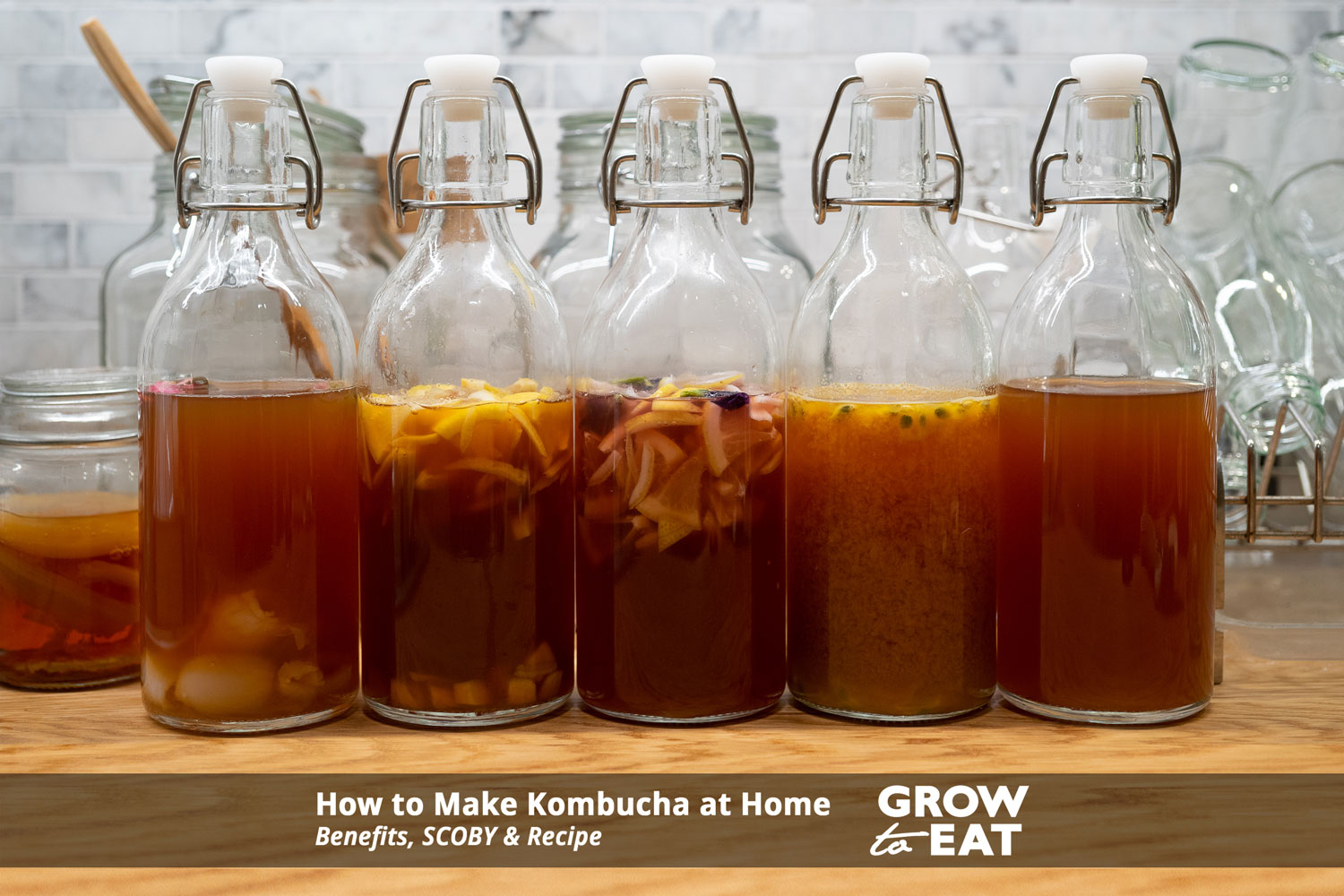
How to Make Kombucha at Home
Known for improving gut health, kombucha is a fermented tea that can be customised to your own taste.
Just like making sourdough bread, you need a mother culture, in this case, a symbiotic culture of bacteria and yeast (SCOBY). Not so delightful looking, the scoby is the goo on the top of your fermentation that looks like it should be discarded, but unless it’s mouldy, it’s perfectly safe, and this is what turns black tea and sugar into kombucha. The scoby feeds on the tannins in the tea and on the sugar, fermenting the liquid and making it fizzy as it releases carbon dioxide.
In order to make your own kombucha, there are three processes to follow: make scoby (skip this step if you have a good friend who will share their scoby with you), first fermentation and second fermentation. Let’s begin:

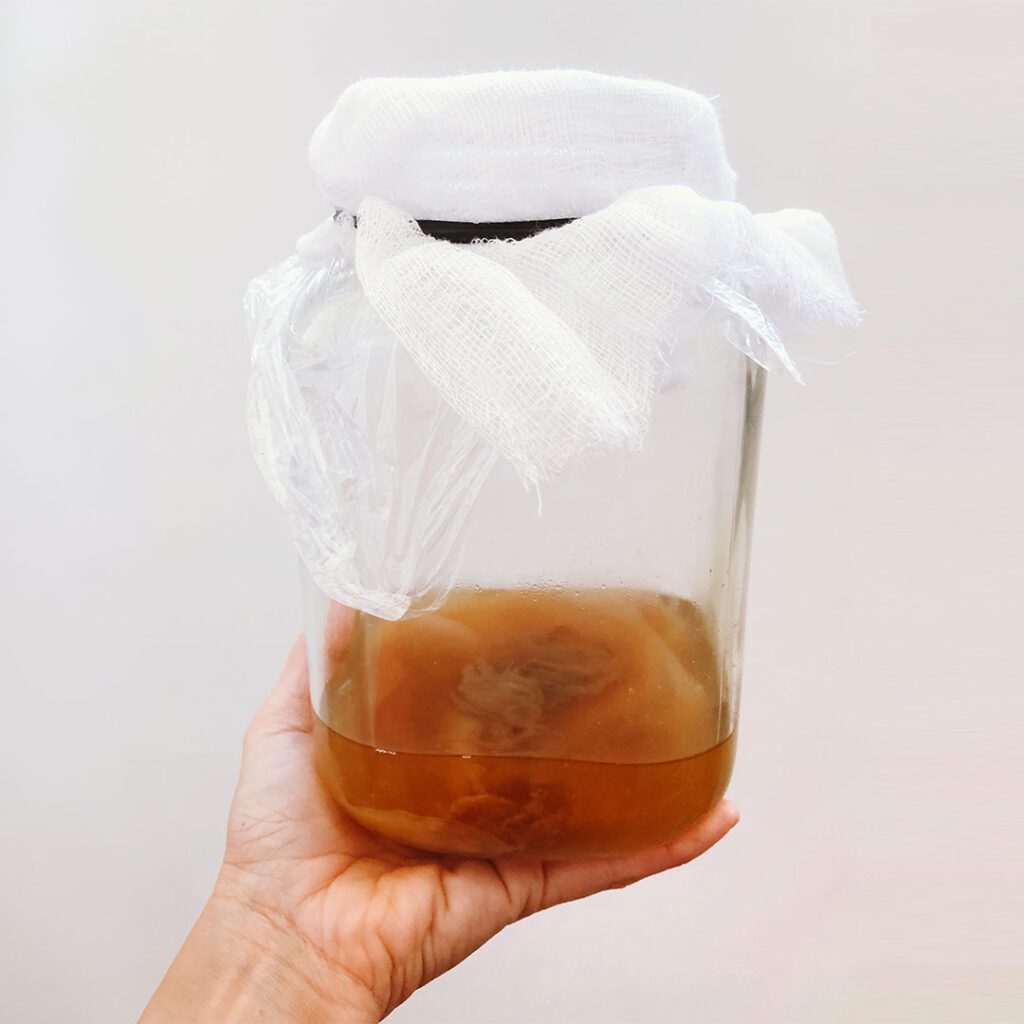

Step 1: Make Scoby
This will make about 4 litres.
Time: 1-4 weeks
Equipment: Saucepan, large glass jar, muslin or cheese cloth, rubber band
Ingredients: 7 cups water, 4 black tea bags, 100g sugar, 1 cup ready-made unflavoured kombucha to get it started.
Method: Bring 2 cups of water to a boil in a clean saucepan and add the tea bags. Allow to steep for 15 minutes, then remove the tea bags and stir in the sugar. Add the 5 cups of cold water. Add the kombucha and pour into a sterilised glass jar. Cover with the cloth and secure with an elastic band. This allows yeasts in the air to get in while keeping insects out. Place in a dark, cool place for 1-4 weeks until a ½ cm thick scoby has formed.
Step 2: First fermentation
Time: 6-10 days
Equipment: Saucepan, same large glass jar, clean muslin or cheese cloth, rubber band
Ingredients: 14 cups water, 8 bags black or green tea, 1 cup white sugar (from your scoby step, you will need 2 cups of the liquid and the scoby)
Method: Boil 4 cups of water in the saucepan and add the 8 tea bags. Let it steep for 15 minutes, remove the tea and stir in the sugar. Cool to room temperature.
From the scoby step, remove all but 2 cups of the liquid and the scoby and add the new tea. Cover with a clean cloth and secure with an elastic band. Set in a dark, cool place for 6-10 days. Begin tasting on day 6. When it is finished, it should be mildly sweet and slightly vinegary.
Step 3: Second fermentation
Time: 3-10 days to carbonate
Equipment: funnel, strainer, bottles with flip tops or heavy-duty screw caps to keep it carbonated. Or use brewing carbonation stoppers that release the gas when necessary.
Ingredients: Sweeteners such as fruit, honey or sugar; flavourings for each cup: 1-2 tablespoons mashed fruit or fruit juice, candied ginger, cinnamon, cloves, turmeric, rosemary, lavender, basil, thyme or mint.
Method: Leave 2 cups of liquid and the scoby in the jar for the next batch, and strain off the rest into sterilised jars, leaving space for flavourings and 2 cm at the top for gases to build. Seal and store in a dark, cool place for 3-10 days until well carbonated. Unlatch carefully, cover the top with a plastic bag to avoid a giant mess, check if it’s carbonated enough, then refrigerate to slow the carbonation and store.
Important notes:
- Never use metal that can react with the acids in the kombucha, or plastic that can hide harmful bacteria.
- Make sure to keep everything clean and sterilised. A rinse with vinegar and hot water for ALL equipment you use.
- Fermentation will be quicker in warmer weather and slower in cold weather.
- If you spot any mould, discard the batch and start again. These bad bacteria can be fatal.
- Tap water is fine.
- Use white sugar.
- Don’t use honey as it can contain harmful bacteria.
- Only add sweeteners at the end of the process.
- Always start with black tea and then add herbal teas at the end for flavour.
- Leave it be to do its thing. A few bubbles will appear in the first few days, and then a thin layer of scoby will start to form, eventually forming a thick layer you can pick up.
Frequently Asked Questions.
Is kombucha alcoholic?
No. Kombucha contains less than 0.5% ABV — comparable to fruit juice — and is classified as a non-alcoholic drink in most countries. It does not break sobriety, though anyone in a recovery programme should check with their support network if they have concerns.
Is it ok to drink kombucha every day?
Yes, up to 240–350ml a day is generally safe for healthy adults. If you’re new to it, start small and build up gradually. Pregnant women, people who are immunocompromised, and those sensitive to caffeine should check with their doctor first.
Does kombucha help with weight loss, blood pressure, and liver health?
Kombucha may support all three as part of a healthy lifestyle. It is low in calories, its probiotics are linked to better cardiovascular function, and its antioxidants may help protect the liver against oxidative stress. It is not a treatment for any condition — think of it as a gut-healthy habit that complements a balanced diet.
Can kombucha help lower cortisol?
Kombucha doesn’t directly lower cortisol, but it supports the gut-brain axis through probiotics and B vitamins that help regulate the body’s stress response. Paired with quality sleep, reduced sugar intake, regular movement, and stress management, it is a practical part of a cortisol-balancing routine.
What are the downsides of kombucha?
Too much can cause bloating or digestive discomfort, and its acidity may affect tooth enamel over time. Home-brewed kombucha carries a small contamination risk if equipment is not properly sterilised — always discard any batch with visible mould.
Who should avoid kombucha?
Pregnant or breastfeeding women, people who are immunocompromised, those with severe digestive conditions in active flare, caffeine-sensitive individuals, and young children should avoid kombucha or consult a doctor first.
Looking for something?
Follow Us

Grow to Eats Categories
DIY Food Gardening
Fruit
Grow To Eat
Herbs
Maintenance
Pests and Diseases
Pollinators
Recipes
Seeds
Spices
Vegetables