Growing Edible Plants Indoors

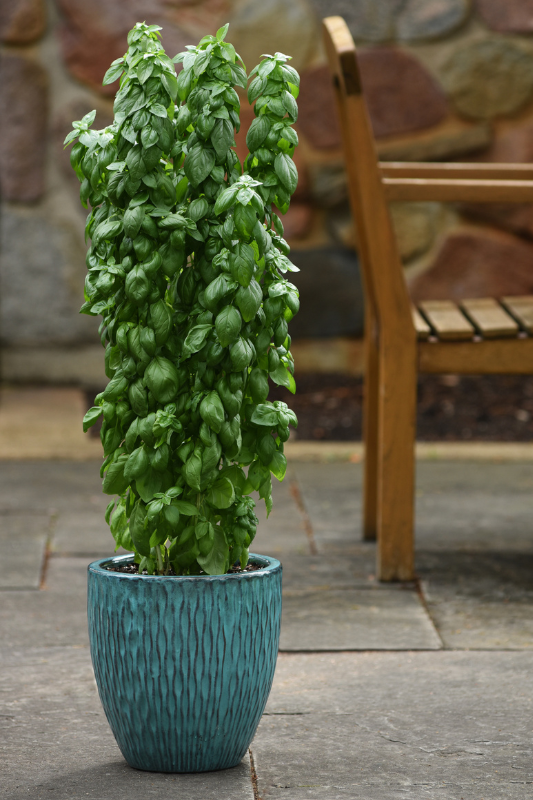
Basil ‘Everleaf’
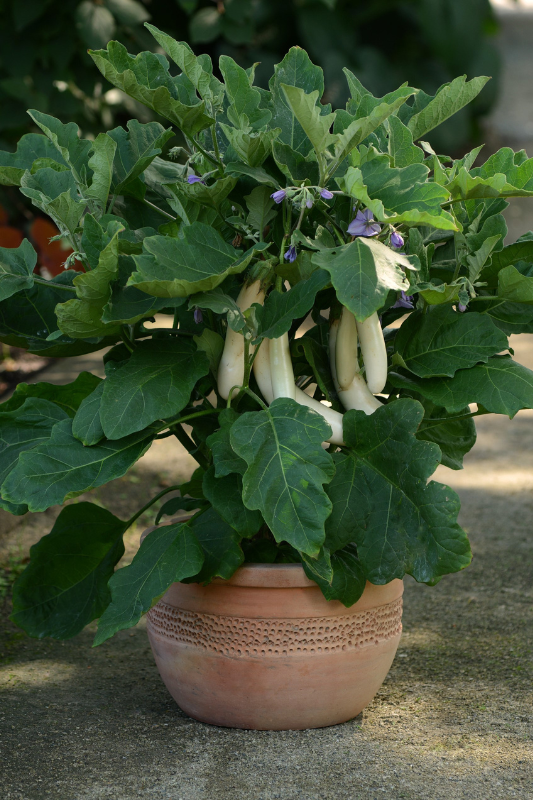
Eggplant ‘Hansel’ and ‘Gretel’
The ‘revolution’ in houseplants has made us much more comfortable with the idea of growing plants indoors. So, the next question, logically, is can I grow my own edible plants indoors? Yes you can, as long as you have the determining factors sorted. These include enough light (sunlight or artificial light), space, a nutritious growing mix and your own available time. Here are some tips to help get you started and some suggestions for edible plants to grow indoors.
Getting the light right
Vegetables, fruit and herbs need at least six hours of sunlight a day. That may be possible in homes with sunny windowsills, patios or courtyards and east, north or west facing rooms that allow in plenty of bright light.
If that is not the case, you can simulate those conditions by using LED Grow Lights, which are stronger (20 to 40 watt) compared to household LED lights (9 watt). When grown under lights, edibles need eight to 12 hours of light a day and seedlings up to 14 hours. The lights must be switched off for at least 12 hours to emulate the regular pattern of day and night.
For germination and early growth blue light (cool white) helps plants produce chlorophyll. Once the plants are growing, red light (warm white) encourages plants to produce flowers and fruit.
The height at which the lights are suspended above the plants is also important. The smaller the plants, the closer the lights (from 10 – 30cm) and as they grow the lights can be raised to 45 – 60 cm above the plants. If the light is too intense the top of the leaves will burn.
LED lights are often teamed with a hydroponic system, but can also be used with normal pots. What’s more, LED lights are a great fall back for supplementing the sunlight and they don’t use as much electricity as normal lights.
Stockists of LED Grow Lights include Seeds for Africa, Makro, www.ledgrowlightsa.co.za. and www.hydroponic.co.za as well as Takealot.com. If you don’t feel very tech savvy, call in a handyman or lighting specialist to set you up.
Space for growing edible plants indoors
This is usually an issue when growing edible plants indoors, especially vegetables. Whether you are using LED lights or natural light, the ideal veggies are those that are compact and grow fast such as lettuces and leafy greens. Leafy herbs also don’t take up much space.
Larger vegetables like tomatoes, cucumber, eggplant, and baby marrows will need more space and are therefore better grown on sunny patios.
Very importantly, having enough space allows for good air circulation that encourages plant growth. Crowding pots together can create the ideal environment for pests to flourish.
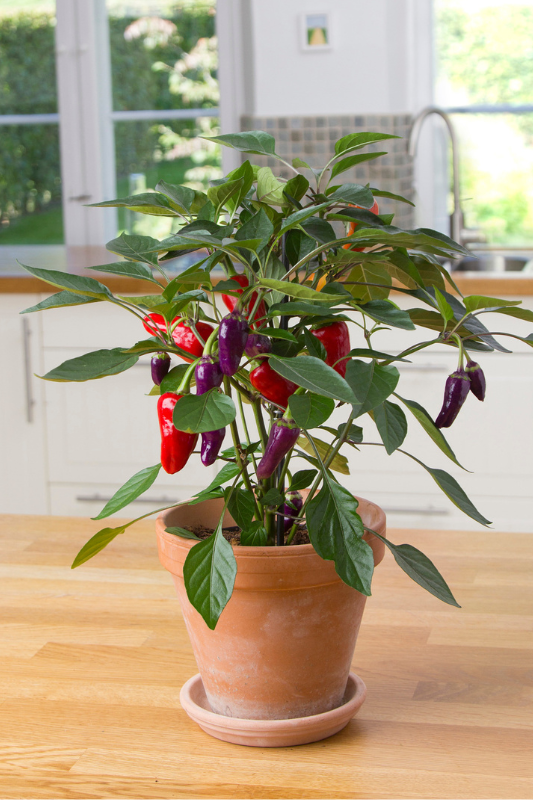
‘Trinidad scorpion’ chillies
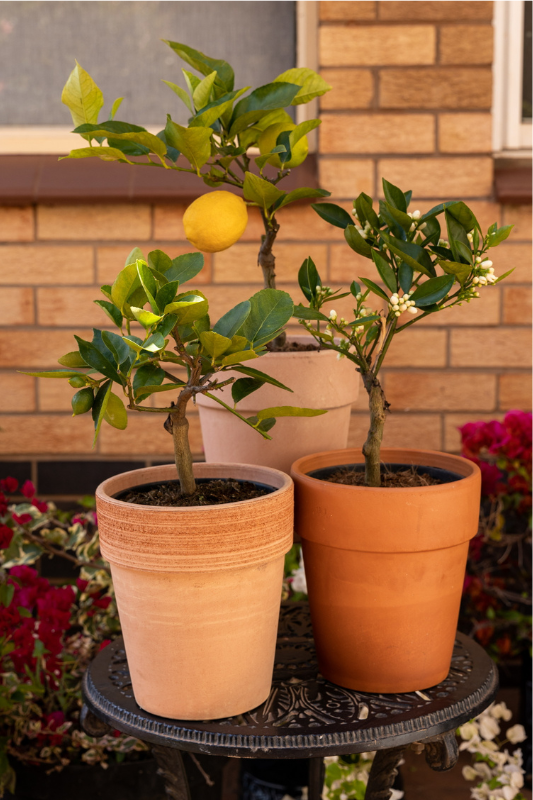
Dwarf citrus ‘Mini-Me’ lemons
Pay attention to the soil
Vegetables especially, need fertile soil and potting mixes don’t provide enough nutrients. When growing edible plants indoors, make sure to use a good quality potting soil. Mix in palm peat or vermiculite for water retention, some lime and a slow-release organic fertiliser. A carbon-based soil conditioner like HumiGro will also make a difference.
Feed with a liquid food like EcoBuz MultiGro, Margaret Roberts Organic Supercharger, Nitrosol or Multifeed every two weeks at half strength.
Most herbs, salad mixes, patio strawberries, dwarf citrus and edible flowers can grow on in their original pots (with regular feeding) but larger patio veggies like patio cucumbers, eggplant and tomatoes will need bigger pots.
Think about time
Start small and learn as you go along. Fortunately, indoor food crops don’t need as much water, but you still need to monitor them for growth, pests, nutrition, etc.
If the veggies are grown under lights, it’s a good idea to have a timer so that you don’t have to remember to switch the lights on or off.
A hydroponic or aquaponic system requires more effort and capital to set up, but once it’s working, the maintenance is minimal.
READ MORE: Learn more about mini citrus trees in this article.
Fruits and Veggies to grow indoors
As mentioned, the ideal veggies are those that are compact and grow fast. These include microgreens, lettuce, Asian greens, Swiss chard, low-growing kale and spring onions. Radishes, beetroot and carrots can be grown as baby veggies.
Larger vegetables like tomatoes, cucumber, eggplant, and baby marrows are better grown on sunny patios. There is a patio range of vegetables, that includes eggplant ‘Hansel’ and ‘Gretel’ and ‘Patio Baby’ as well as pot peppers and some really hot chillis like ‘Trinidad scorpion’ and ‘Carolina Reaper’.
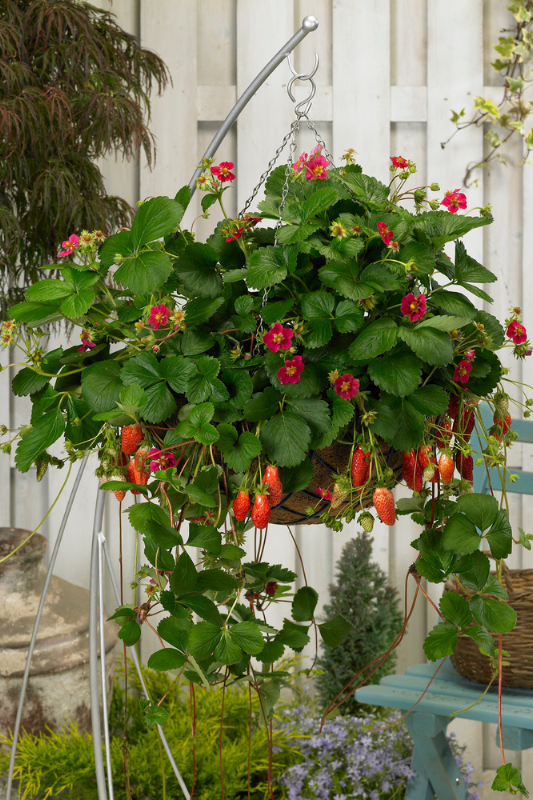
Also suitable for inside/outside sunny spaces are strawberries in hanging baskets and the dwarf citrus ‘Mini-Me’ range that includes lemon, naartjie, orange and limes.
Edible flowers to grow indoors
Edible flowers cheer up the home and provide colour for salads and desserts.
There is a new nasturtium called ‘Ice Cream Sundae’. The flowers have a subtle spicy, peppery flavour and mature from bright yellow to scarlet with everything in between. The plant is compact, with dark green leaves (also edible). Why not add some violas, pansies and chamomile to the mix. Purple chive flowers are also edible. They will need plenty of sun or artificial light to flower well.
READ MORE: Learn more about edible flowers in this article.

Herbs to grow indoors
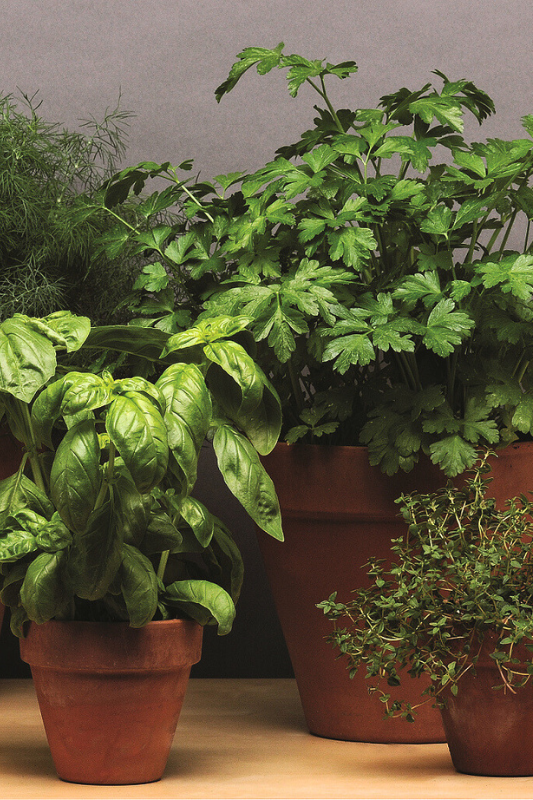
If you want to grow herbs on a sunny windowsill or under lights, choose good culinary herbs with compact growth. These include mint, parsley, lemon thyme, chives and garlic chives, coriander, chervil, sage, oregano, marjoram, rocket, salad burnet and winter savory.
Sweet basil is a must but not your tall growing garden basil. There are compact patio varieties such as ‘Dolce Fresca’, a midsized plant that stays bushy and compact, Basil ‘Everleaf’ which is a columnar basil and highly disease-resistant, and Basil ‘Eleonora’ a very flavourful basil that’s resistant to downy mildew.
When growing herbs indoors, rotate the pots regularly so that all sides are exposed to the sun. Also, don’t expect them to act like perennials because window sill pots are actually too small for sustainable growth, especially if they are not getting enough light. You can extend their life by feeding with a liquid food. Herbs infested with aphids or red spider, should be cut right down, rather than spraying with pesticides.
Delicious tea herbs
Herbal teas don’t require much more than a sprig at a time, and the best herbs are those with fragrant aromatic leaves and flowers.
Lemon verbena, pineapple sage, rose geranium, lavender and fennel all have strong or fruity flavours, and even though they grow into large garden plants they can be started off indoors as small plants and transplanted outdoors or replaced. The ‘Simply Salad’ range has a dwarf rosemary too that doesn’t grow much higher than 60cm.
Also delicious are the many mint varieties, especially peppermint, or apple mint, as well as chamomile. They are lower growing, spreading varieties that could be grown in hanging baskets.
To make a tea, pick a sprig of leaves and flowers, and crush them slightly to release the flavour. Put them in a cup and pour over freshly boiled water and steep for about five minutes. Strain and sweeten with a little honey if you have a sweet tooth.
READ MORE: Get some tips for growing veggies in window boxes.
Mushrooms are the exception
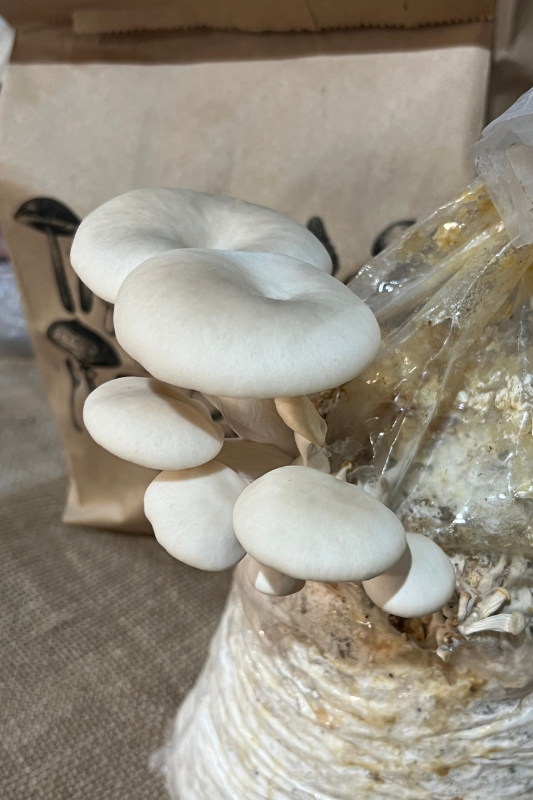
These are the only food crop that thrives in the dark and are dead easy to grow using mushroom grow kits. The Mushroom Box was first on the scene with a range of oyster mushrooms but has since been followed by other suppliers like MyAquaponics and Bob Shop (formerly bidorbuy) that supplies button mushroom kits.
Each kit provides simple, detailed instructions and the only real requirements are high humidity (a humidifier is ideal) and to keep the box or kit out of the sun.
All the kits can be ordered online. It’s a really nice present for people who love mushrooms.
Tips for growing edible plants indoors
- Don’t over water. Once a week should be enough, depending on the size of the pot and plant. Push your finger into the soil to check its moisture. The general rule is to let the soil almost dry out before watering.
- Don’t let plants sit in a saucer of water. This causes the roots to rot.
- Household dust, fats and fluff can smother the leaves. Spritz the leaves or wipe off the dust with a damp cloth or moistened paper towel.
Looking for something?
Follow Us

Grow to Eats Categories
DIY Food Gardening
Fruit
Grow To Eat
Herbs
Maintenance
Pests and Diseases
Pollinators
Recipes
Seeds
Spices
Vegetables